
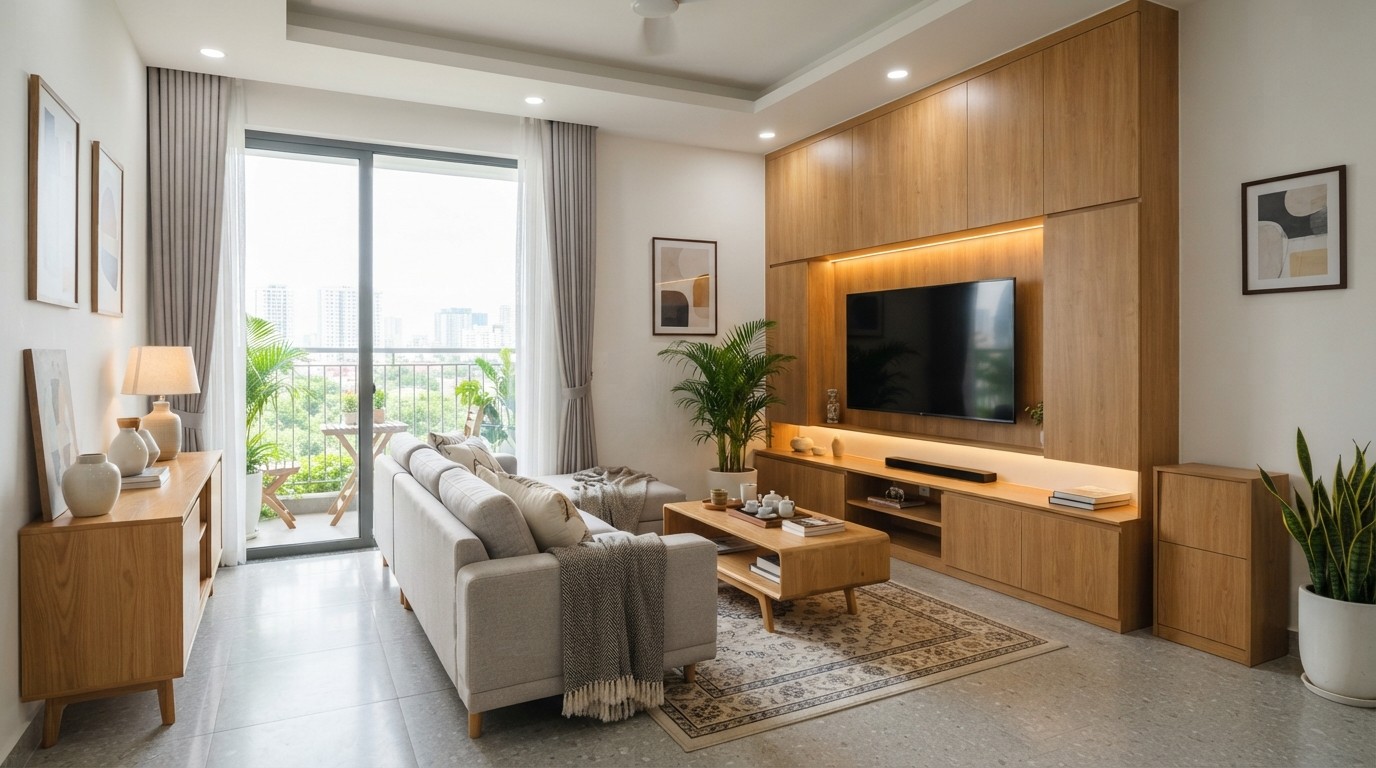
In modern interior design and construction trends, industrial wood has become the premier material solution replacing natural wood. With high aesthetics, diverse designs, and reasonable costs, this material line appears in almost all modern apartments, townhouses, and offices today.
What is Industrial Wood and Its Basic Structure
Industrial wood (or engineered wood) is a material manufactured from wood chips, wood fibers, or thin slices of natural wood combined with glue, additives, and pressed under high pressure and temperature. The source of wood raw materials is usually harvested from short-term cultivated trees.
A complete industrial wood panel usually consists of two main parts:
Core Board (Wood Core): Determines the thickness, load-bearing capacity, moisture resistance, and mechanical durability of the panel.
Surface Finish Layer: Helps protect the inner wood core from mold and scratches, while creating an aesthetic appearance with diverse grains or colors.
Most Popular Types of Industrial Wood Cores Today
Depending on processing technology and wood fiber density, industrial wood is divided into various core lines to serve different purposes of use.
1. MFC Core (Melamine Faced Chipboard)
MFC wood is particle board made from natural wood chips mixed with specialized glue and pressed. MFC wood cores are commonly used for flat furniture products such as working desks, office cabinets, or partitions due to their extremely optimized cost.
2. MDF Core (Medium Density Fiberboard)
MDF wood is formed from finely ground wood fibers combined with a binder. The surface of the MDF panel is very flat and smooth, convenient for processing complex surface finishes.
Regular MDF: Suitable for use in dry areas like bedrooms and living rooms.
Moisture-Resistant MDF (Green Core): Distinctive with good waterproof capabilities, suitable for kitchen areas or high-humidity locations.
3. HDF Core (High Density Fiberboard)
HDF wood has a much higher wood fiber density compared to MDF, pressed under very high pressure. This board line has superior load-bearing, moisture-resistant, and soundproofing capabilities, commonly applied as wood flooring or high-end cabinet systems.
4. Plywood
Plywood is created from multiple thin layers of natural wood peeled and glued together in cross-grain directions. Thanks to this structure, Plywood has high mechanical durability, good bending load capacity, and superior water resistance.
Common Industrial Wood Surface Finishes
The exterior finish plays a decisive role in the aesthetic appearance of interior products. Here are the popular surface materials on the market:
Melamine: A thin resin film applied directly to the wood core, featuring rich colors, light scratch resistance, and accessible pricing.
Laminate: Thicker and more high-end than Melamine, capable of resisting heat, impact, and scratches very well with surfaces simulating authentic wood and stone grains.
Acrylic: A luxurious mirror-gloss surface that reflects light well to help expand spaces, highly favored for modern kitchen cabinet doors.
Veneer: A thin layer of natural wood veneer that fully preserves the rustic beauty and true colors of precious woods.
Outstanding Advantages of Industrial Wood in Interior Construction
It is not by chance that industrial wood has become the priority choice of architects and homeowners when creating modern living spaces.
Limiting Warping and Termites: Through chemical treatment and modern heat pressing processes, industrial wood overcomes the shrinkage and termite drawbacks of natural wood.
Diverse Designs: Customers can easily choose from modern solid color tones to unique wood grain or concrete grain styles.
Optimizing Construction Time: Industrial wood is produced in standard sheet formats, helping the cutting and assembling processes take place quickly.
Eco-Friendly: Using short-term cultivated wood helps limit the illegal exploitation of natural forests.
Experience in Choosing the Right Industrial Wood for Each Space
To ensure the lifespan and aesthetics of the project, choosing the right type of industrial wood for each area is a decisive factor.
For areas frequently exposed to water such as kitchen cabinets and bathrooms, homeowners should choose moisture-resistant green core wood or Plywood combined with Laminate/Acrylic finishes to ensure long-term durability.
With dry spaces like bedrooms, study rooms, or living room decorative partitions, regular MDF wood cores with Melamine finishes are solutions that both ensure functionality and save investment budgets.
If you are hesitating in choosing the most suitable material for your home, contact KQ HOME immediately. Our team of professional architects and engineers is always ready to survey, consult, and provide the most optimal turnkey interior design and construction solutions.
KQ Home Editorial
Design, construction and interior trend insights from the architects and engineers at KQ Home.
Get a free consultation →