
When starting an interior fit-out or furnishing project for your home, choosing the right wood material is always one of the most critical decisions. In today's market, solid wood and engineered wood are the two most popular material choices. Each comes with its own unique characteristics regarding durability, aesthetics, and cost. Understanding the key differences between these two material lines will help you easily make the best choice tailored to your family's needs and budget.
1. Origin and Manufacturing Process
The first core difference lies in the source of raw materials and how the products are manufactured.
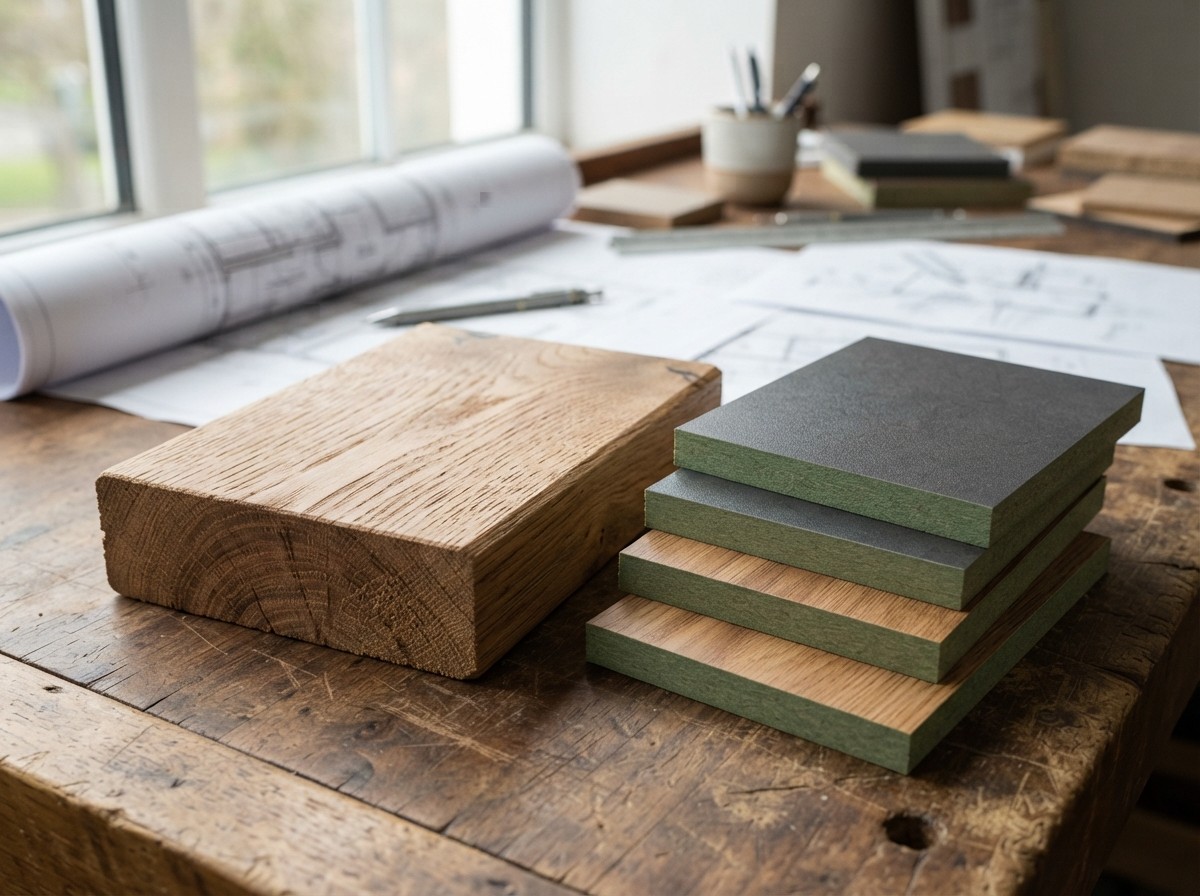
Solid wood: Harvested directly from trunk timber of natural forests or plantation trees. After being sawn into planks, the wood undergoes kiln-drying and chemical treatment to reduce moisture content and prevent termite infestation before fabrication. Thanks to natural growth patterns, every piece of timber boasts one-of-a-kind grain patterns.
Engineered wood: Produced from wood fibers, shavings, branches, or recycled wood ground into fine particles. These materials are combined with specialized adhesives and additives, then pressed under high pressure and temperature into standardized panels. The surfaces of engineered wood boards are typically finished with decorative overlays such as Melamine, Laminate, Acrylic, or natural wood Veneer.
2. Comparing Durability, Moisture Resistance, and Termite Resistance
Durability is always a key factor carefully evaluated by homeowners when selecting interior materials.
Load-Bearing Capacity and Lifespan
Solid wood: Features a dense, sturdy, and resilient structure with excellent load-bearing capacity and a long lifespan. However, if the kiln-drying process does not meet standards, solid wood remains prone to warping, twisting, or shrinking with weather fluctuations.
Engineered wood: Thanks to uniform compression, engineered wood is virtually free from climate-induced shrinkage or warping. However, its mechanical joint holding strength and structural load-bearing capacity are generally lower than solid wood.
Moisture and Termite Resistance
Solid wood: Offers good water resistance when thoroughly sealed and finished. However, solid wood remains an attractive food source for termites if not comprehensively pre-treated with anti-termite solutions.
Engineered wood: Today's moisture-resistant green-core board grades offer impressive humidity resistance suitable for daily residential use. Containing resin binders and additives, they are also less appealing to termites. Nevertheless, prolonged exposure to standing water or flooding should still be avoided.
3. Aesthetics and Design Styles
Each material type complements distinct interior design directions.
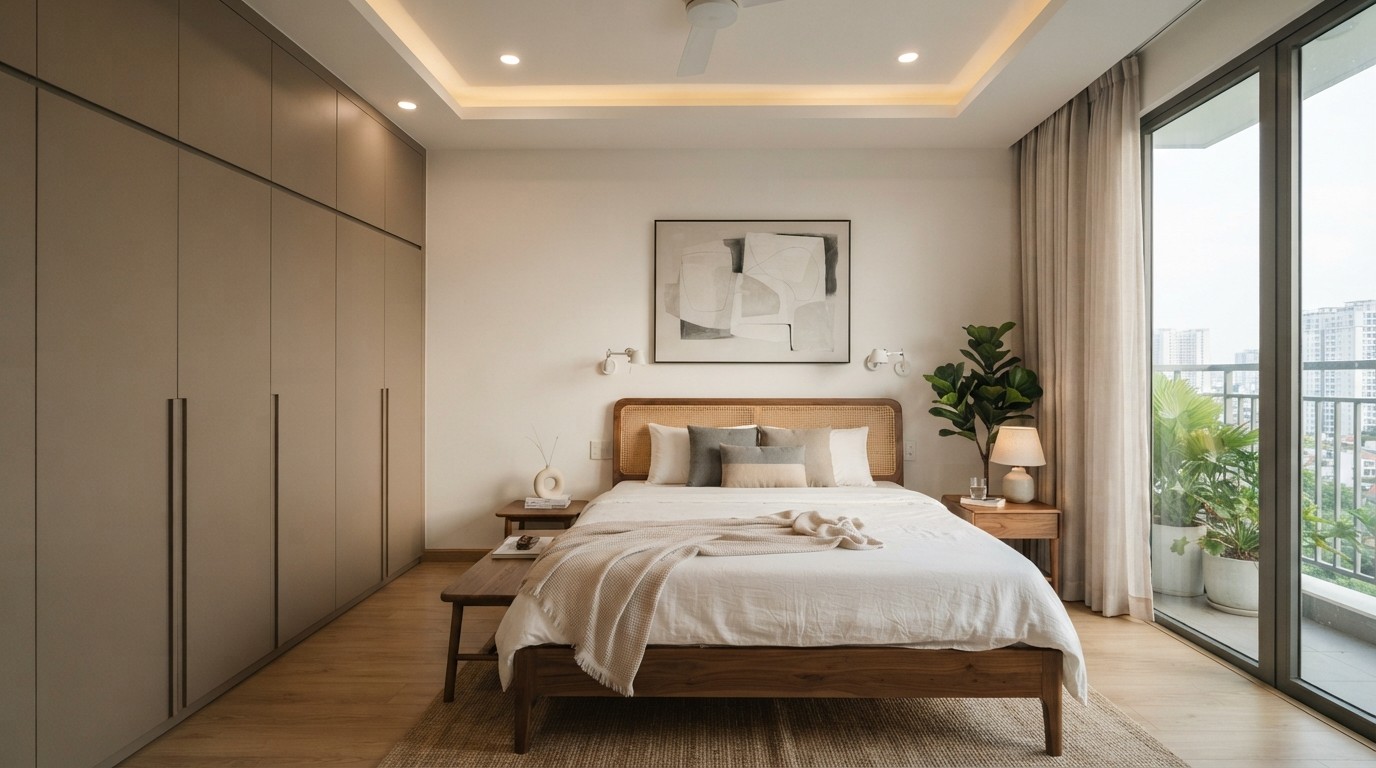
Furniture made from solid wood exudes a warm, luxurious, and prestigious aesthetic. Soft, natural grain patterns combined with the versatility for intricate carving make it the premier choice for Classic, Neoclassical, Indochine, or Traditional Asian design styles.
On the other hand, engineered wood stands as a symbol of modern aesthetics. Boasting a vast collection of finishes—ranging from solid plain colors and wood grain textures to stone and concrete patterns—it seamlessly integrates into Modern, Minimalist, or Scandinavian (Scandi) styles. Smooth, sleek surfaces enable clean, refined furniture silhouettes that optimize living space.
4. Investment Cost and Fabrication Timeline
Budget requirements and installation timelines also mark a clear distinction between the two material groups:
Cost: Solid wood commands a higher price point due to increasingly scarce raw timber resources and labor-intensive craftsmanship. Engineered wood offers a more budget-friendly price, optimizing costs for a wider range of homeowners.
Fabrication timeline: Engineered wood panels come in pre-manufactured standard sizes that are easy to process with automated machinery, resulting in swift manufacturing and installation. Solid wood requires extensive seasoning, drying, and meticulous hand-crafting, leading to a longer delivery lead time.
Should You Choose Engineered Wood or Solid Wood?
There is no absolute single "perfect" choice, only the option best suited to your space, lifestyle, and practical conditions:
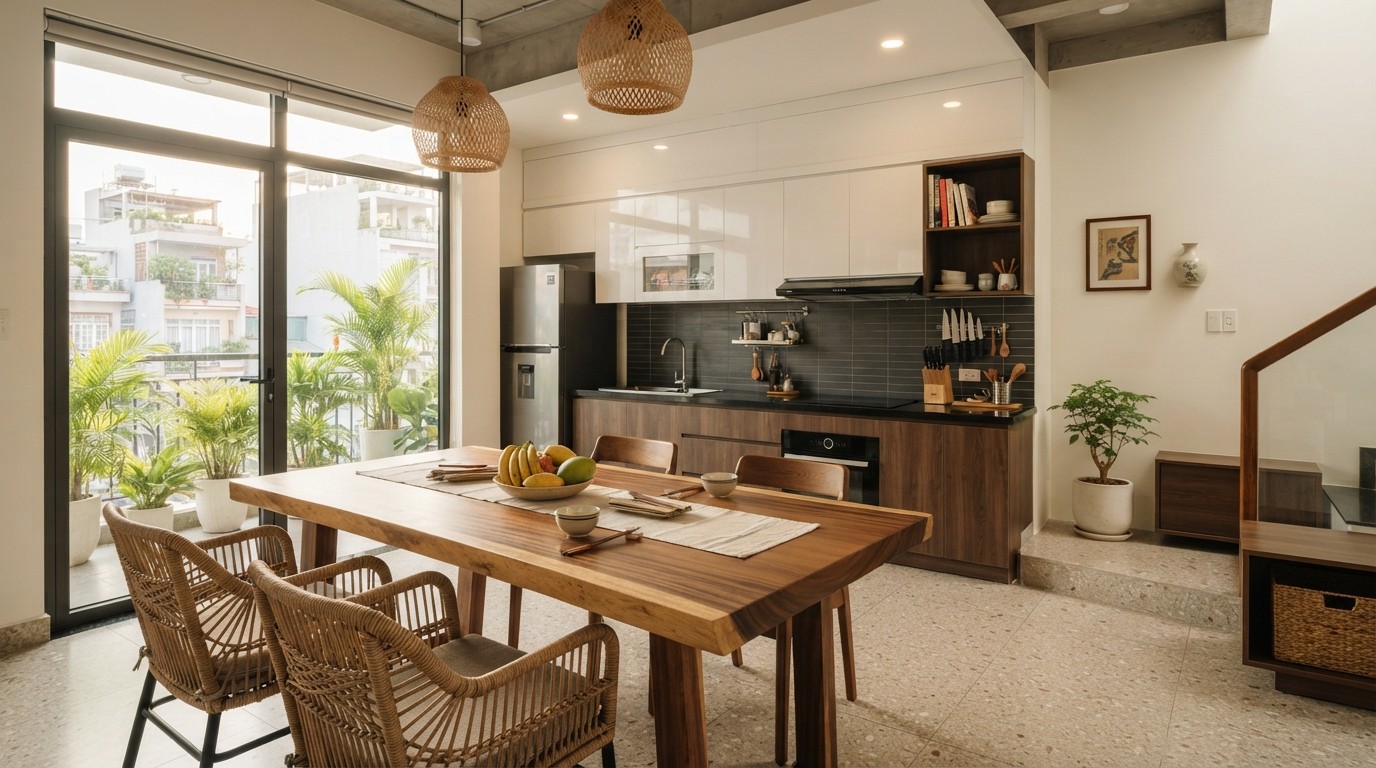
Choose solid wood if you love traditional, timeless elegance, prioritize long-lasting durability across decades, and have a flexible budget.
Choose engineered wood if you desire a sleek modern living space, fast installation, diverse color finishes, and optimal cost efficiency.
Many modern residential projects cleverly combine both materials: using solid wood for high-wear, load-bearing components like door frames, staircases, and dining sets, while using engineered wood for wardrobes, TV consoles, and bed frames to optimize overall cost and visual harmony.
If you are still deciding on the ideal materials for your dream home, reach out to the architect team at KQ HOME. We are ready to conduct site surveys, advise on optimal material solutions, and deliver the perfect living space for your family.