
In modern interior design and fit-out trends, engineered wood has become the leading material solution replacing natural solid wood. Featuring high aesthetic appeal, a wide variety of finishes, and reasonable costs, this material is widely used in most contemporary apartments, townhouses, and offices today.
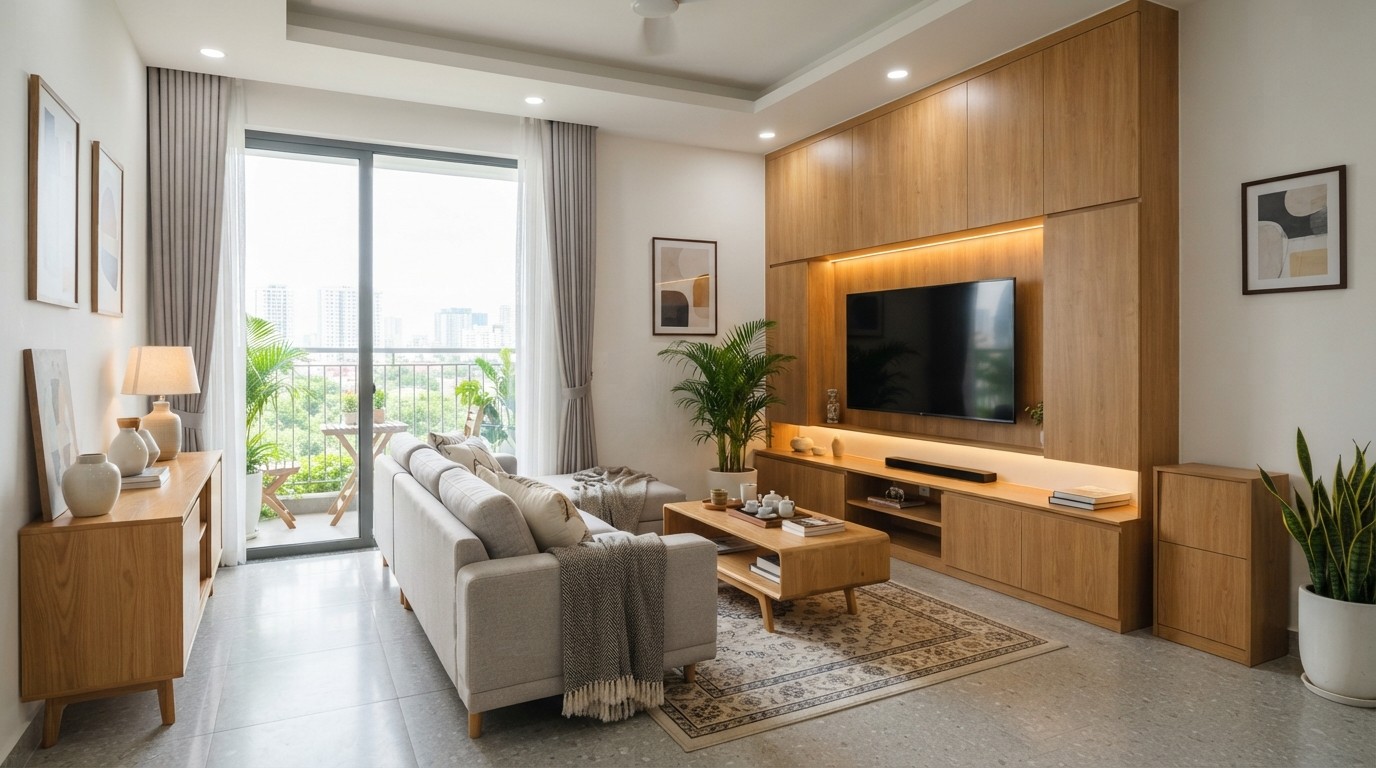
What is Engineered Wood and Its Basic Structure?
Engineered wood (also known as manufactured board or industrial wood) is a material produced from wood particles, fibers, or thin natural wood veneers combined with adhesives and additives, compressed under high pressure and temperature. The timber source is typically harvested from short-rotation plantation trees.
A complete engineered wood panel typically consists of two main parts:
Substrate (Core): Determines the thickness, load-bearing capacity, moisture resistance, and mechanical durability of the panel.
Surface finish (Laminate/Overlay): Protects the inner core from moisture, mold, and scratches while providing aesthetic appeal with a wide range of colors and grain patterns.
Most Popular Types of Engineered Wood Substrates
Depending on processing technology and wood fiber density, engineered wood panels are classified into several substrate types to suit specific applications.
1. MFC Core (Melamine Faced Chipboard)
MFC is a particleboard made from natural wood chips mixed with specialized resin and compressed under heat. MFC cores are commonly used for flat interior applications such as office desks, shelving, storage units, or partitions due to their highly cost-effective nature.
2. MDF Core (Medium Density Fiberboard)
MDF is formed from finely ground wood fibers combined with synthetic binders. The surface of an MDF panel is exceptionally smooth and flat, making it ideal for applying complex decorative surface finishes.
Standard MDF: Ideal for dry interior areas such as bedrooms and living rooms.
Moisture-Resistant MDF (Green Core): Features superior moisture resistance, making it suitable for kitchen areas or environments with high humidity levels.
3. HDF Core (High Density Fiberboard)
HDF features a much higher wood fiber density than MDF, compressed under high pressure. This board offers superior load-bearing strength, moisture resistance, and acoustic insulation, commonly applied in laminate flooring and high-end cabinetry.
4. Plywood
Plywood is constructed from multiple thin layers of natural wood veneer stacked crosswise in perpendicular grain directions. Thanks to this cross-laminated structure, Plywood exhibits high mechanical strength, excellent bending resistance, and superior water resistance.
Common Surface Finishes for Engineered Wood
The exterior finish plays a decisive role in the aesthetic appearance of interior furniture. Here are the most common surface materials available on the market:
Melamine: A thin decorative resin-impregnated paper applied directly onto the substrate, available in diverse colors and patterns, offering mild scratch resistance at an affordable price point.
Laminate: Thicker and more durable than Melamine, offering high heat resistance, impact resistance, and excellent scratch resistance with realistic wood grain or stone textures.
Acrylic: A high-gloss, mirror-like surface that reflects light effectively to visually expand spaces, widely favored for modern kitchen cabinet fronts.
Veneer: A thin slice of real natural wood applied to the core, retaining the organic texture and authentic warmth of precious timber species.
Key Advantages of Engineered Wood in Interior Fit-Outs
It is no coincidence that engineered wood has become the top choice for architects and homeowners when crafting modern living spaces.
Resistant to warping and termites: Advanced thermal pressing and chemical treatments help engineered wood overcome natural wood's tendencies to warp, shrink, or succumb to termite damage.
Diverse design options: Clients can effortlessly choose from contemporary solid colors to unique wood grains or concrete textures.
Optimized installation time: Manufactured in standardized panel sizes, engineered wood allows for swift cutting, fabrication, and assembly.
Eco-friendly choice: Utilizing short-rotation plantation timber reduces the reliance on illegal deforestation and natural forest exploitation.
Tips for Selecting the Right Engineered Wood for Every Space
To ensure structural longevity and aesthetic excellence, selecting the right engineered wood panel for each specific area is essential.
blockquote>For areas frequently exposed to moisture such as kitchen cabinets and bathroom vanities, homeowners should opt for green-core moisture-resistant substrates or Plywood paired with Laminate/Acrylic finishes to guarantee long-term durability.
For dry spaces like bedrooms, home offices, or living room decorative accent walls, standard MDF with Melamine facing provides an ideal balance of functionality and cost-efficiency.
If you are undecided on choosing the ideal materials for your home, contact KQ HOME today. Our team of professional architects and engineers is always ready to survey, advise, and deliver the most optimal turnkey interior design and construction solutions.